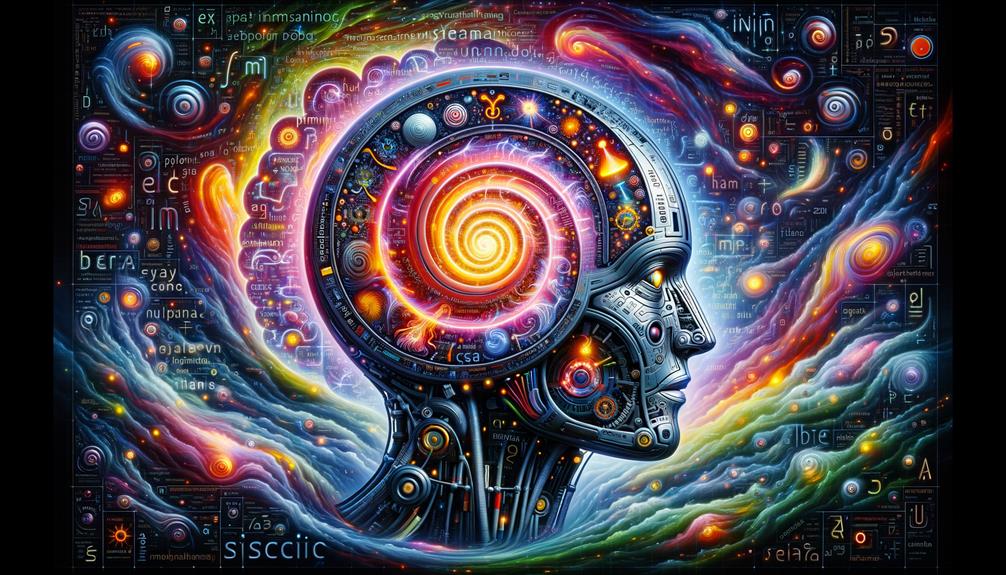
Human language is complex. People communicate using different languages, accents, expressions, contexts, and writing styles. Teaching computers to understand this complexity is one of the major challenges in Artificial Intelligence.
Natural Language Processing (NLP) is the technology that helps computers process, understand, analyze, and generate human language.
NLP has become an essential component of modern digital services, including chatbots, search engines, translation tools, voice assistants, and text-analysis systems.
What Is Natural Language Processing?
Natural Language Processing is a field of Artificial Intelligence that combines computer science, linguistics, and Machine Learning to enable computers to work with human language.
NLP systems can process both written and spoken language.
For example, when a person asks a question through a voice assistant, NLP technologies can help convert the speech into meaningful information and determine what the user wants.
How NLP Works
NLP systems can perform multiple tasks when processing language.
These may include:
- Identifying words and phrases
- Understanding context
- Classifying text
- Extracting information
- Analyzing sentiment
- Translating languages
- Generating responses
Modern NLP increasingly uses Machine Learning and Deep Learning techniques to handle complex language patterns.
Applications of NLP
Chatbots
Businesses use NLP-powered chatbots to communicate with customers and answer frequently asked questions.
Translation
NLP helps computers translate text between different languages.
Search Engines
Search systems can use language-processing techniques to better understand queries and identify relevant information.
Sentiment Analysis
Companies can analyze customer reviews and social media content to understand whether opinions are positive, negative, or neutral.
Voice Assistants
NLP is an important component of systems that allow users to interact with computers through spoken commands.
Benefits of NLP
Natural Language Processing can improve communication between humans and machines.
Businesses can use NLP to:
- Automate customer support
- Analyze customer feedback
- Process large amounts of text
- Improve search experiences
- Automate document processing
- Extract useful information
NLP and Deep Learning
Deep Learning has significantly improved NLP capabilities. Neural networks can process large amounts of text and learn complex relationships between words and phrases.
Modern language systems can perform tasks such as summarization, translation, classification, question answering, and text generation.
Challenges of NLP
Human language contains ambiguity, slang, cultural references, sarcasm, and context-dependent meanings. These factors make language understanding challenging for computers.
Different languages and dialects can also require specialized datasets and models.
Privacy and responsible handling of language data are additional considerations when deploying NLP systems.
The Future of Natural Language Processing
NLP is expected to become increasingly integrated into software applications, customer service platforms, search systems, productivity tools, and communication technologies.
As language models and AI systems continue to improve, interaction between people and computers may become increasingly natural.
Conclusion
Natural Language Processing is helping bridge the gap between human communication and computer technology. By combining linguistics, Machine Learning, and Deep Learning, NLP enables computers to process and understand language in increasingly sophisticated ways.
As Artificial Intelligence continues to evolve, NLP will remain an important technology for creating more accessible and intelligent digital experiences.